Annual Report: Executive Summary for the Reena All Boards Retreat 2026
During 2025–26, 40 people entered residential, respite or day services. Several transitions involved hospitals, alternate-level-of-care beds, long-term care, refugee experiences or complex behavioural and health needs. The Programs submission also identifies dual diagnosis, aging and dementia, respite and family outreach as areas requiring continued attention.
These trends suggest that future demand will increasingly require specialized staff, adaptable funding arrangements and deeper coordination with healthcare, seniors’ services and community partners.
Housing, primary care, developmental services, employment, community participation and systems advocacy are increasingly connected. The Thornhill Community Health Centre, Frankfort Family Reena Residence, Tansley residence and individualized community transitions demonstrate a broader model in which Reena addresses several dimensions of a person’s life rather than delivering programs in isolation.
This reinforces Reena’s distinctive position as both a service provider and a developer of community-based solutions. It also increases the need for coordinated governance, leadership accountability and operating systems across Reena, Batay Reena and the Reena Foundation.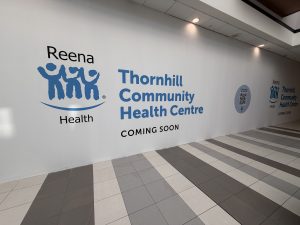
The Thornhill Community Health Centre represents a significant expansion of Reena’s role. The model includes approximately $1.9 million in annual funding, a target of about 4,188 attached patients by the end of 2027, an interprofessional team and accessibility incorporated into the physical environment and clinical model.
The participation of 24 people with lived experience, caregivers and healthcare professionals in the co-design process is particularly important. It provides a practical example of how Reena can translate “Nothing About Us, Without Us” into service design.
For the Boards, the Health Centre introduces opportunities for greater impact alongside new governance, clinical, privacy, workforce, partnership and operating responsibilities. Its planned January 2027 opening should be presented as a forward-looking milestone rather than a 2025–26 service result.
The Intentional Community Consortium grew from approximately 50 to more than 70 organizations, with about 80 participants attending the October 2025 Day on the Hill. Reena also became AIDE Canada’s Ontario hub, providing approximately 10 hours of weekly live-chat support and developing accessible resources for people, families and professionals.
The Health Centre partnerships further extend this model into primary care, mental health, education and community services. Partnership development should therefore be treated as a core organizational capability with clear objectives and measures—not simply as a stakeholder-relations activity.
Learning and Development supported 820 internal learners, 5,368 course completions and 312 external learners. Reena has also onboarded more than 250 employees over two years and provided 100 individualized leadership-development sessions to 20 managers.
This represents significant learning activity, but it also reflects the demands created by organizational growth and increasingly complex supports. Recruitment, onboarding, leadership development, mandatory training compliance and staff retention remain central operational risks.
GReena demonstrates how employment, accessibility, food security and environmental sustainability can be connected. The initiative includes more than 1,200 growing containers across 47 Reena and community locations. The hydroponic operation increased weekly capacity by 77% within the same footprint and continues to provide paid employment opportunities.
The next stage should measure the social and financial impact of the model, including employment outcomes and the proposed connection to the Health Centre through social prescribing.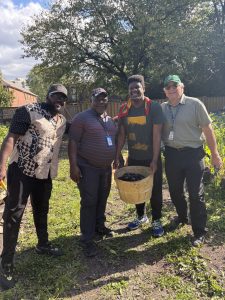
For Reena Inc.:
- Revenue increased 5.1% to $84.4 million.
- Expenses increased 5.5% to $85.1 million.
- The annual deficit increased from approximately $391,000 to $723,000.
- Capital assets increased 50.3% to $118.4 million.
- Total assets increased 27.5%, while liabilities increased 29.3%.
- Fund balances declined from $4.5 million to $3.8 million.
The annual report also presents an aggregate across Reena, Batay Reena and the Reena Foundation. It shows $201.9 million in assets, $170.9 million in liabilities and a combined annual deficiency of approximately $1.33 million. These figures are an organizational overview, not consolidated audited statements.
The central financial trend is clear: Reena has considerably more physical capacity, but operating revenue is not growing as quickly as the costs and obligations associated with that capacity.